
Gender affirmation surgery is designed to align the body more closely with gender identity through carefully planned genital reconstruction.
This page focuses on male-to-female genital affirmation surgery / SRS, with planning based on anatomy, tissue availability, treatment goals, and surgical suitability. This is a major life-changing procedure where surgeon experience, aesthetic outcome, vaginal depth, and sensation all matter.
Starting from 350,000 THB (~ 10,600 USD)

Male-to-female genital affirmation surgery, also called SRS or vaginoplasty, is designed to create female genital anatomy that is planned to look natural, support appropriate depth, and preserve sexual sensation where possible.
The surgical plan may involve different tissue sources depending on anatomy and goals, including penile and scrotal skin techniques, colon vaginoplasty, or penile-peritoneal vaginoplasty (PPV). The reference page explains that the new vaginal canal is created between the rectum and urethra, with tissue used to form the vaginal lining and external genital structures such as the labia and clitoris
Gender affirmation surgery may be suitable for patients seeking genital reconstruction as part of transition. General suitability may include:
clear long-term gender affirmation goals
appropriate mental health assessment
readiness for major surgery and recovery
understanding of long-term aftercare, including dilation where required
anatomy and tissue characteristics that suit the chosen technique
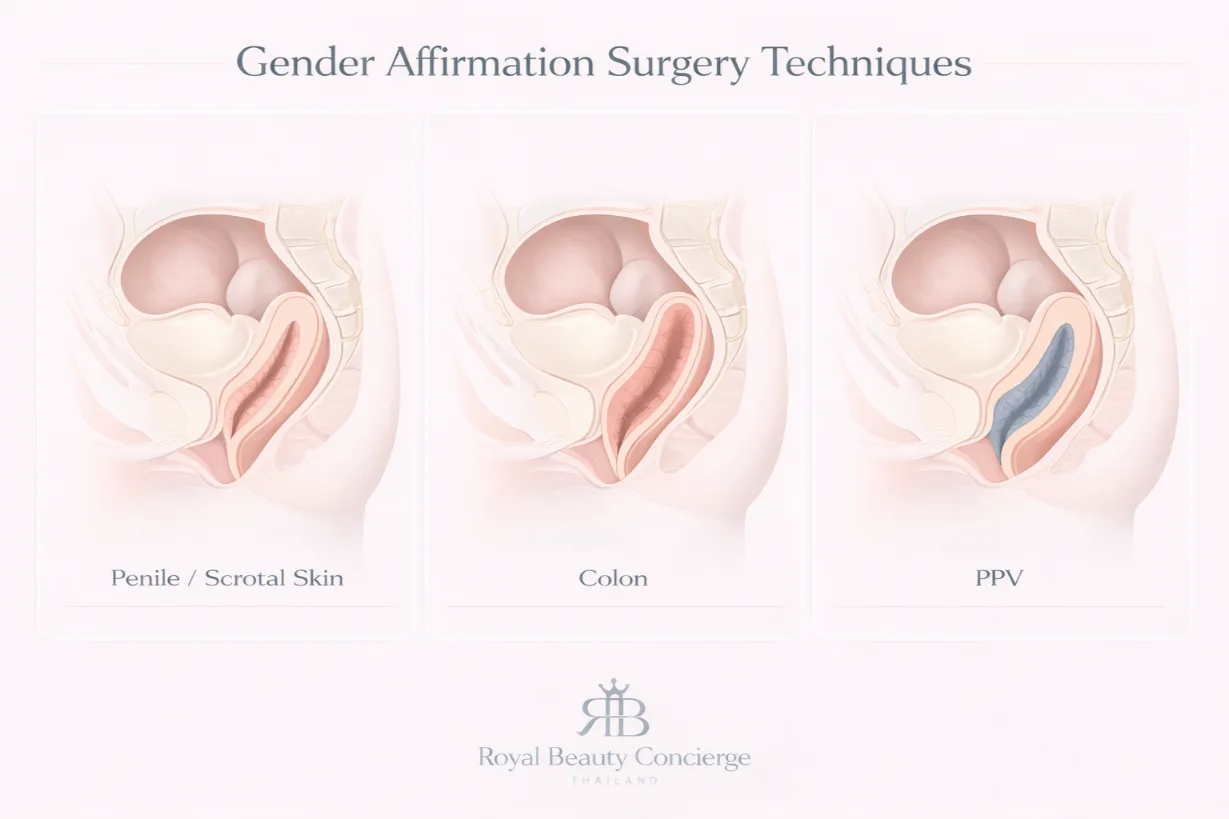
A traditional technique using existing genital skin to form the vaginal canal and external genital structures.
Patients whose anatomy and tissue availability suit skin-based vaginal construction.
A technique using a segment of colon to create the vaginal lining.
Selected patients who need greater depth or a different tissue option than skin-only techniques.
The reference material describes colon vaginoplasty as offering a deeper canal and continuous lubrication, while also noting it is more complex surgery, can require bowel preparation, may not suit higher-BMI patients, and may not be suitable for people with chronic colitis or Crohn’s disease.
A technique combining penile skin with peritoneal tissue.
Selected patients who may benefit from a combined approach using internal tissue support together with penile skin.
The source material presents PPV as a newer combined technique and notes it may also be useful in revision settings or in patients who are not good candidates for colon-based reconstruction.
The exact surgical plan depends on the technique used, but the procedure usually involves:
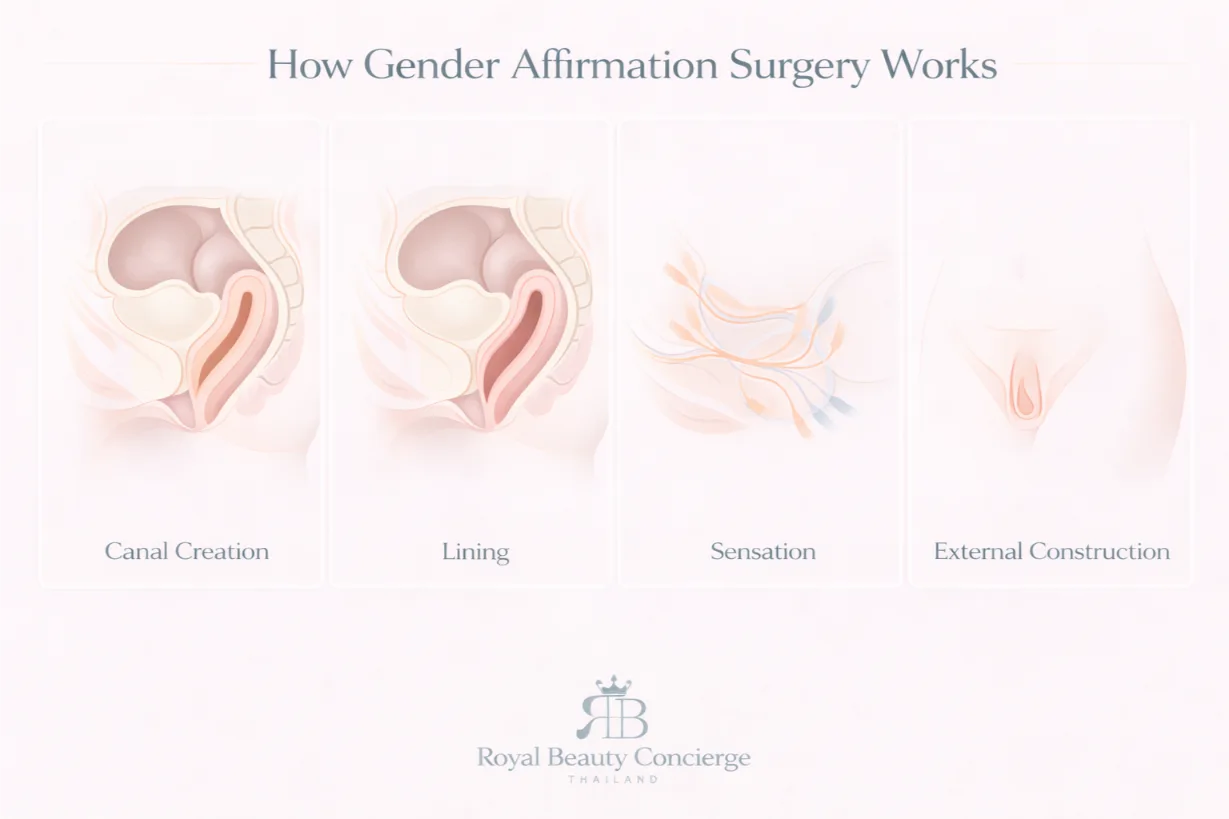
The canal is created in the space between the rectum and urethra.
Tissue is used to form the vaginal wall, depending on the selected technique.
Sexual sensation is planned through careful preservation and transfer of sensory tissue where appropriate.
The external genital structures are shaped to create a feminine appearance, including the labia, clitoris, and urethral opening.
The source page also notes that hair removal requirements differ by technique. Skin-based vaginoplasty techniques may require genital hair removal in specific areas before surgery, while some techniques require less or different preparation.
Hair removal requirements vary depending on the technique used.
In general:
The exact plan depends on the surgical method chosen and your anatomy. The source material lays out different pre-op hair removal requirements for no-vaginal-depth surgery, skin-based vaginoplasty, colon vaginoplasty, and PPV.
Recovery planning is a major part of treatment.
The source material describes at least 4–6 nights in hospital for non-colon techniques, lying on the back with the hips elevated in the first 1–2 days, side-lying from day 3, and preparing accommodation for 1–2 weeks after surgery to manage wound care and dilation.
Gender affirmation surgery is not only about anatomy. It is also about choosing the right technique, planning depth and appearance appropriately, preserving function and sensation where possible, and supporting recovery carefully.

Your case is reviewed by the surgeon who performs your procedure, with planning based on your anatomy, surgical goals, recovery needs, and medical suitability.

Surgery is performed in a private hospital in Bangkok, Thailand, with anaesthesia care and post-operative monitoring built into the process.
Many international patients are not only comparing prices. They are also comparing surgical technique, hospital setting, recovery requirements, and how clearly the process is explained before they travel.
Gender affirmation surgery can be life-changing, but it is still major surgery.
This page refers to male-to-female genital affirmation surgery, also called SRS or vaginoplasty, designed to create female genital anatomy in a way that aligns more closely with gender identity.
Psychiatric assessment and a readiness certificate are commonly part of the preparation process.
Yes. Surgical planning may involve skin-based vaginoplasty, colon vaginoplasty, or penile-peritoneal vaginoplasty, depending on anatomy and goals.
Possibly. Hair removal requirements depend on the surgical technique being used.
The source material notes that for non-colon techniques, patients may stay in hospital for at least 4–6 nights, though exact recovery planning depends on the technique and your healing.
Technique choice, surgeon experience, appearance, depth, sensation, aftercare, and your long-term recovery plan all matter.