
Rhinoplasty is designed to refine nasal shape, improve balance in the facial profile, and address structural concerns in the nose.
Treatment may involve closed rhinoplasty, open rhinoplasty, tip refinement, alar base refinement, cartilage grafting, or ultrasonic bone work, depending on your anatomy and goals.
Starting from 105,000 THB (~ 3,180 USD)

Rhinoplasty is nose surgery designed to improve nasal shape, profile balance, tip definition, bridge contour, or structural support.
Depending on the area being treated, the procedure may involve closed rhinoplasty, open rhinoplasty, tip refinement, alar base refinement, cartilage grafting, or ultrasonic bone work.
The right approach depends on anatomy, skin thickness, structural support, healing, and the kind of result that can be achieved safely and naturally.
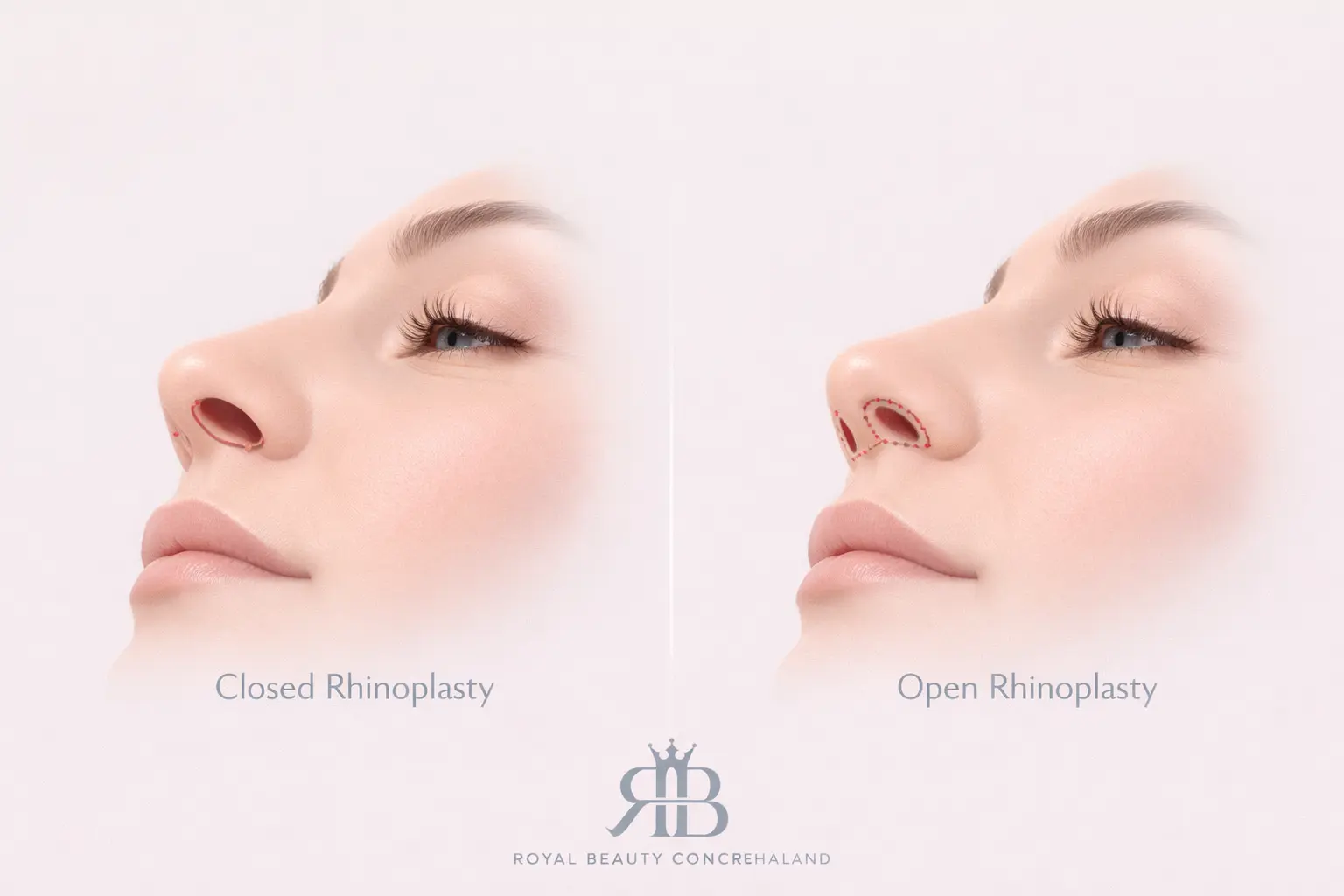
Incisions are placed inside the nostrils.
Patients whose goals can be addressed without the added exposure of an open approach.
Incisions are placed inside the nose, with a small external incision across the columella between the nostrils.
Patients needing more detailed structural reshaping, tip work, grafting, or more complex changes.
The lower third of the nose, especially the nasal tip.
Patients bothered by a broad, rounded, drooping, or less defined nasal tip.
Incisions are typically placed at the base of the nostrils where they are intended to heal as discreetly as possible.
Patients concerned by nostril width, flare, or lower nasal width.
To support the bridge, tip, or internal nasal structure when more stability or shaping is needed.
Patients who need structural support, more precise shaping, or added reinforcement as part of the rhinoplasty plan.
Nasal bone reshaping, especially when bridge or bony contour work is needed.
Patients who may benefit from more controlled bone work as part of rhinoplasty planning.
| Procedure | Main difference | Incision area | Best suited for |
|---|---|---|---|
| Closed rhinoplasty | All incisions remain inside the nose | Inside the nostrils | Patients whose goals can be addressed through an internal approach |
| Open rhinoplasty | Adds a small external incision for more exposure | Inside the nose plus across the columella | Patients needing more detailed structural reshaping or grafting |
Tip refinement for a broader, drooping, or less defined tip
Alar base refinement for nostril width or alar flare
Cartilage grafting when added support or structure is needed
Ultrasonic bone work in selected cases involving the bony bridge or nasal bones
Not every patient needs every technique.
The right combination depends on what can be improved safely and naturally.
Rhinoplasty is not only about changing the shape of the nose. It is also about choosing the right surgical plan for facial balance, structural support, and safe healing.

Your case is reviewed by the surgeon who performs your procedure, with planning based on your anatomy, skin thickness, structural goals, recovery period, and medical suitability.

Rhinoplasty is performed in a private hospital in Bangkok, Thailand, with appropriate anaesthesia care and post-procedure monitoring built into the process.
Swelling, congestion, and facial puffiness are common.
Early healing is reviewed, and splint or suture removal may be considered depending on the procedure.
Much of the early bruising and swelling begins to settle, although the nose is still healing.
The nose usually continues to refine as swelling improves. Final settling takes longer, especially in the tip.
Rhinoplasty can create meaningful improvement in shape and balance, but it is still real surgery. Potential risks may include:
Begin with a confidential assessment. We will review your concerns, explain which rhinoplasty approach may be suitable, and outline pricing and recovery clearly before you decide.
Rhinoplasty pricing on this page starts from 105,000 THB. Final pricing depends on whether the plan involves closed rhinoplasty, open rhinoplasty, tip refinement, alar base refinement, cartilage grafting, or additional structural work.
Closed rhinoplasty uses incisions placed inside the nose only. Open rhinoplasty uses internal incisions plus a small incision across the columella to allow greater exposure for more detailed reshaping.
Tip refinement focuses on improving the shape, projection, width, or definition of the nasal tip.
Alar base refinement is designed to reduce nostril width or alar flare in selected patients.
Cartilage grafting may be used when additional structure, support, or shaping is needed as part of the rhinoplasty plan.
Ultrasonic bone work is used in selected cases to shape nasal bone more precisely when bridge or bony contour changes are needed.
Most international rhinoplasty patients should plan around 10–14 days in Thailand, depending on the procedure and healing.
Closed rhinoplasty does not involve an external columella incision. Open rhinoplasty includes a small incision across the columella, and alar base refinement involves incisions at the base of the nostrils.
Early recovery is often around 1–2 weeks, but swelling and refinement continue beyond that, especially in the nasal tip.
Yes, many patients do. However, travelling alone still requires clear recovery planning and follow-up before flying home.